


Deep in the Peruvian Amazon, hands lower a length of Peruvian Pima cotton into a bath of plant extract. The colour is faint at first. It will take hours of sunlight and open air to deepen it — slowly, unpredictably, alive. This is where every piece in our Natural Dye collection begins: not in a factory, but on the banks of a river, in the hands of artisans who have carried this knowledge across generations.
A People of the Ucayali
The Shipibo-Konibo live along the Ucayali, one of the great tributaries of the Amazon in eastern Peru. Some 35,000 to 40,000 people, spread across roughly 150 communities along the river. Their culture reaches back millennia — and with it, a textile tradition that remains among the oldest and most vibrant in South America.
At its heart is Kené: an art form of labyrinthine, geometric patterns created by Shipibo women. The designs do not illustrate stories in a literal sense. They map something deeper — the order of the cosmos, the course of the rivers, the passage between the visible and the invisible world. Each design is unique. Each is drawn freehand, without stencil, without template. The knowledge passes from mother to daughter, generation upon generation, and the skill of a woman's hand is held in the highest regard within Shipibo communities.
To us, the Shipibo artisans are not suppliers. They are partners, whose work gives our pieces a dimension that no industrial process could ever reach.
Colour from the Rainforest
The colours of our Natural Dye collection do not come from a laboratory. They grow. They ripen. They are gathered — with an intimate knowledge of which tree, which fruit, which river clay yields which tone.
The bark of the mahogany tree produces warm, earthy browns — the colour of the rainforest floor. The huito fruit — botanically Genipa americana — yields a juice that appears clear and unremarkable when first extracted. Only upon contact with air does it oxidise, transforming into a deep blue-black as dark as an Amazonian night. Achiote seeds, also known as annatto, carry within them a vivid red pigment called bixin, used for millennia to colour textiles, paint skin and tint food.
The particular hue of our current collection comes from the coca plant. Here, the layers of this collaboration reveal themselves: coca has held a central place in Peruvian indigenous culture for over 8,000 years — as tea, as medicine, as a cultural staple. By supporting legal coca cultivation in the region, we help foster sustainable livelihoods for farmers who have too often borne the weight of an illicit industry.
From Fruit to Fabric
Gathering the dyeing materials alone can take days. The artisans know where the right trees stand, when a fruit has reached the precise ripeness for its strongest pigment, and they read the conditions of the forest the way one might read a map.
The Pima cotton is submerged in the dye bath, then dried beneath the Amazonian sun. This cycle repeats — a single cloth may be dyed and dried up to ten times before the desired depth of colour is reached. Between each immersion, the sun and the air do their work: deepening the tone, fixing the pigment, shifting the nuance layer by layer.
What emerges is never the same twice. The concentration of the plant extract varies with the ripeness of the fruit. Humidity determines how quickly a pigment oxidises. And sometimes it rains that day in the Amazon — and the rain dilutes the dye bath, nudging the colour by a shade that no one had planned.
To us, this is not a flaw. It is a signature. Every piece that leaves our Natural Dye collection carries the imprint of a particular day.
Why Not Synthetic Dyes
The textile industry is one of the world's largest contributors to industrial water pollution. The World Bank estimates that 17 to 20 per cent of industrial water contamination originates from the dyeing and finishing of textiles. Seventy-two toxic chemicals have been identified in waterways from textile dyeing alone — thirty of which cannot be removed by conventional treatment. An estimated 280,000 tonnes of dye are lost to the environment each year.
Natural dyes leave no such trace. The plant materials the Shipibo work with are biodegradable. The water used in the dyeing process does not burden any ecosystem.
We want to be honest: natural dyes have their limits. The colour palette is narrower than what synthetic chemistry can offer. The time required is incomparably greater. And the tones vary between batches — which in industrial manufacturing would be a problem. For us, it is precisely the opposite: it makes every piece a one-of-a-kind, carrying its own story.
Every Piece Tells
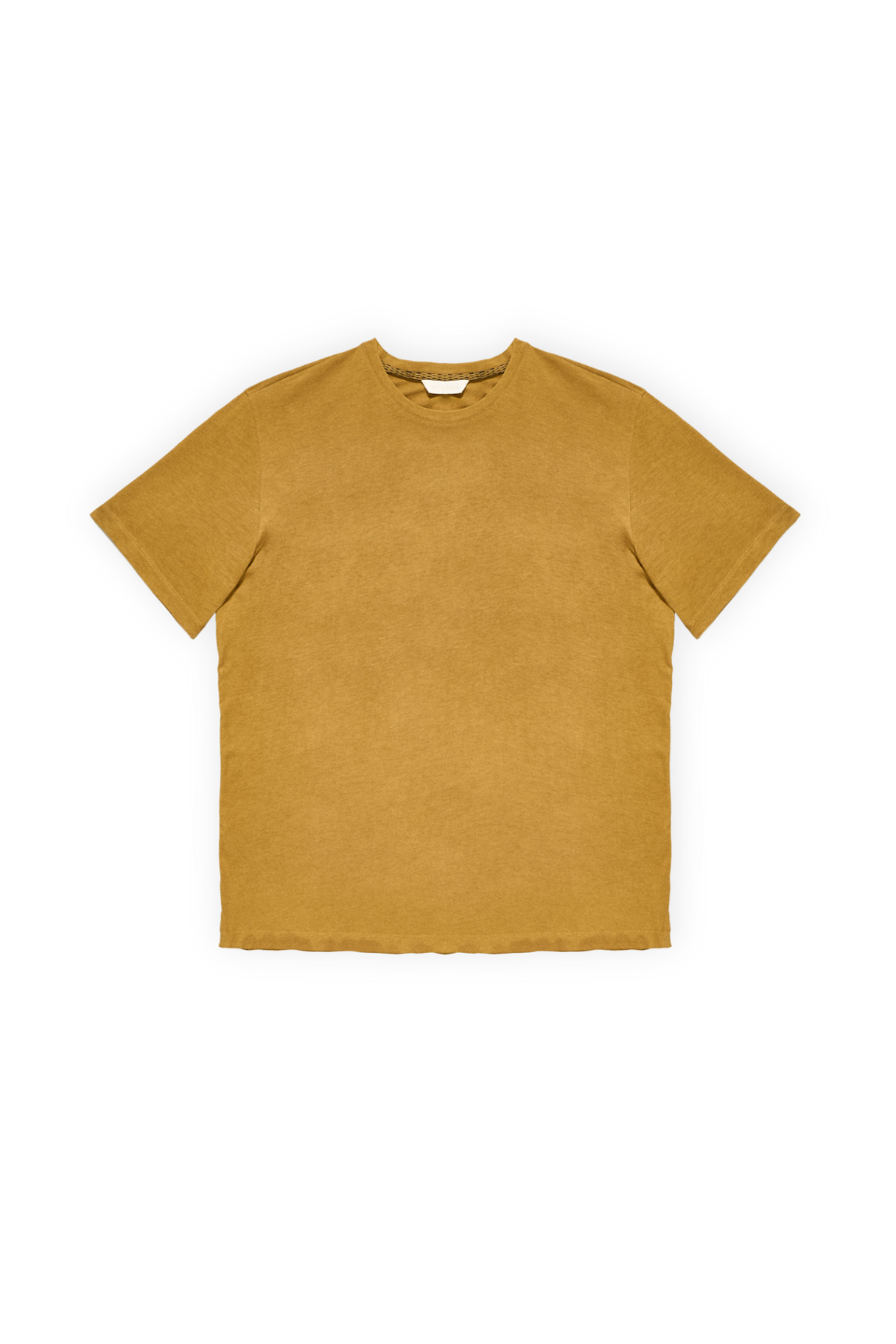
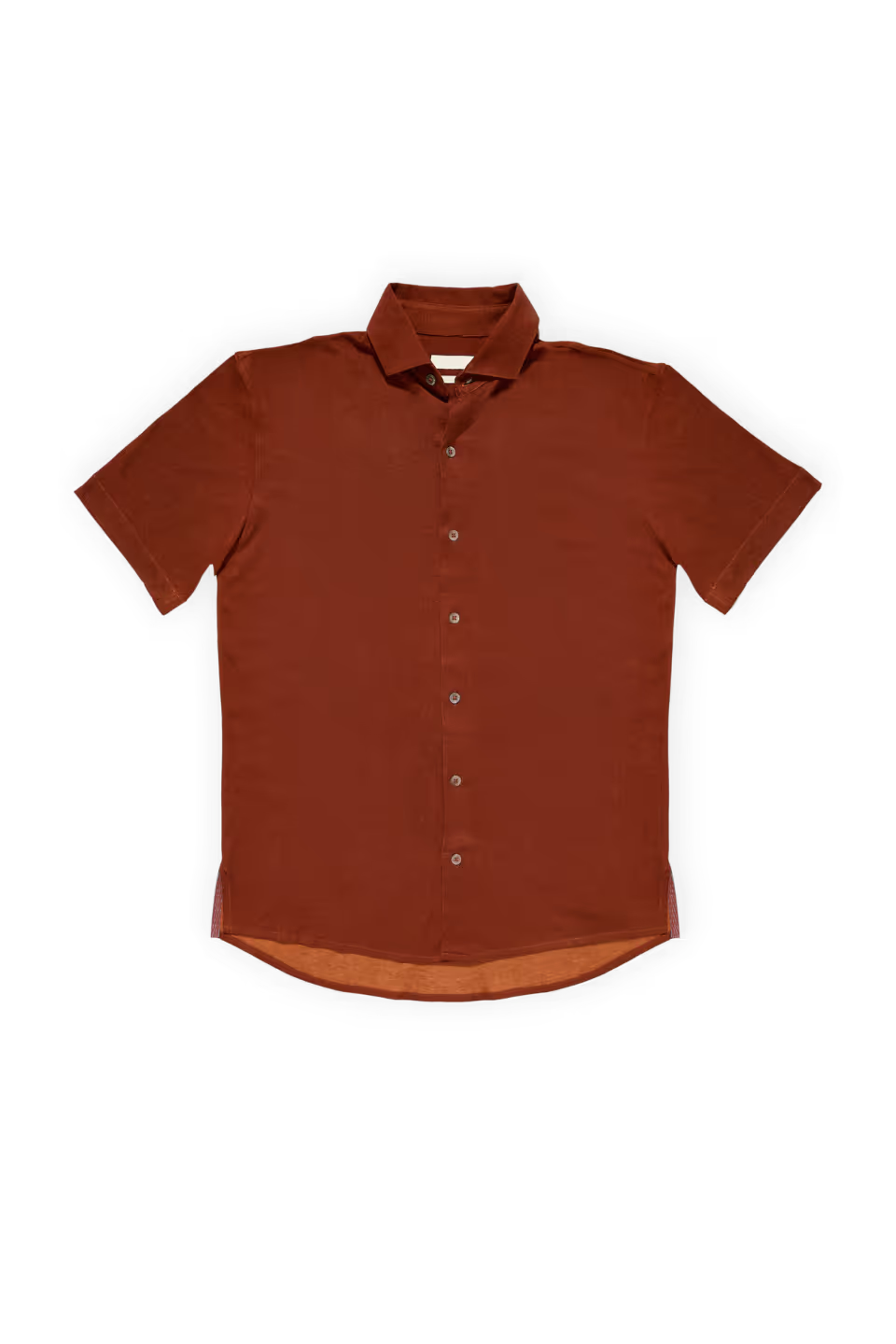
When you first hold a Natural Dye T-Shirt or one of our Natural Dye Shirts, you hold more than a garment. You hold the rainforest, the river, the hands that lowered this cloth into a bath of colour. You hold the rain of a particular afternoon. You hold knowledge that has grown across generations.
No identical piece exists twice. That is not a limitation — it is a promise. In a world where clothing is produced in millions of identical copies, a piece that has its own day is a quiet act of counter-position.
We call it Honest Beauty. Beauty born from a real story. From real hands, real plants, real rain.
Frequently Asked Questions
The Shipibo-Konibo are an indigenous people of the Peruvian Amazon. Approximately 35,000 to 40,000 people live along the Ucayali River in eastern Peru. They are renowned for their millennia-old textile art called Kené — geometric patterns drawn freehand by women and passed down through generations.
The Shipibo use materials gathered from the rainforest: mahogany bark for warm browns, huito fruit (Genipa americana) for deep blue-black, achiote seeds for vivid reds, and river clay for black. The current colourway of our collection is derived from the coca plant, which has been central to Peruvian indigenous culture for thousands of years as a tea, medicine and cultural staple.
Each piece is dyed by hand using plant extracts whose pigment concentration fluctuates naturally. The ripeness of the fruit, the humidity and the weather on the day of dyeing all influence the final tone. If it rains that day in the Amazon, the colour shifts. This is not a defect — it is the character of hand-dyed clothing.
Natural dyes behave differently from synthetic dyes. Rather than simply fading, they develop a patina over time — much like leather or wood. With proper care, naturally dyed pieces will accompany you for many years, gaining character along the way.
Wash naturally dyed pieces in cold water, by hand or on a gentle cycle. Avoid tumble drying and dry the garment in shade rather than direct sunlight. Our care page offers detailed guidance for all Chirimoya materials.
Explore the collection
Related Articles

What Makes Loungewear Ultra-Soft, and How Do You Choose the Best Quality Pieces?
Discover what truly makes loungewear ultra-soft, from fiber origin to artisan finishing, and how to judge real quality before you buy.

How Does Artisanal, Small-Batch Clothing Production Help Fight Climate Change?
How small-batch Andean craftsmanship removes carbon-heavy manufacturing from fashion and makes clothing built to last.

