


Some stories begin with an idea. Ours began with a touch. In the coastal valleys of Peru, where the air carries the warmth of sun-baked earth and distant salt, we held a fibre for the first time that felt unlike anything we had known. That single moment set in motion a journey that would take us across the Andean mountain range into Colombia, and finally to Vienna — and out of it, Chirimoya was born.
A Fibre That Changed Everything
Peruvian Pima cotton grows where the Andes meet the Pacific — in the northern coastal valleys of Piura and Chira, beneath a sun that shines nearly all year round. The soil is rich, the rains arrive when they should. These are conditions that cannot be replicated, and they produce a fibre that stands apart in the world of cotton.
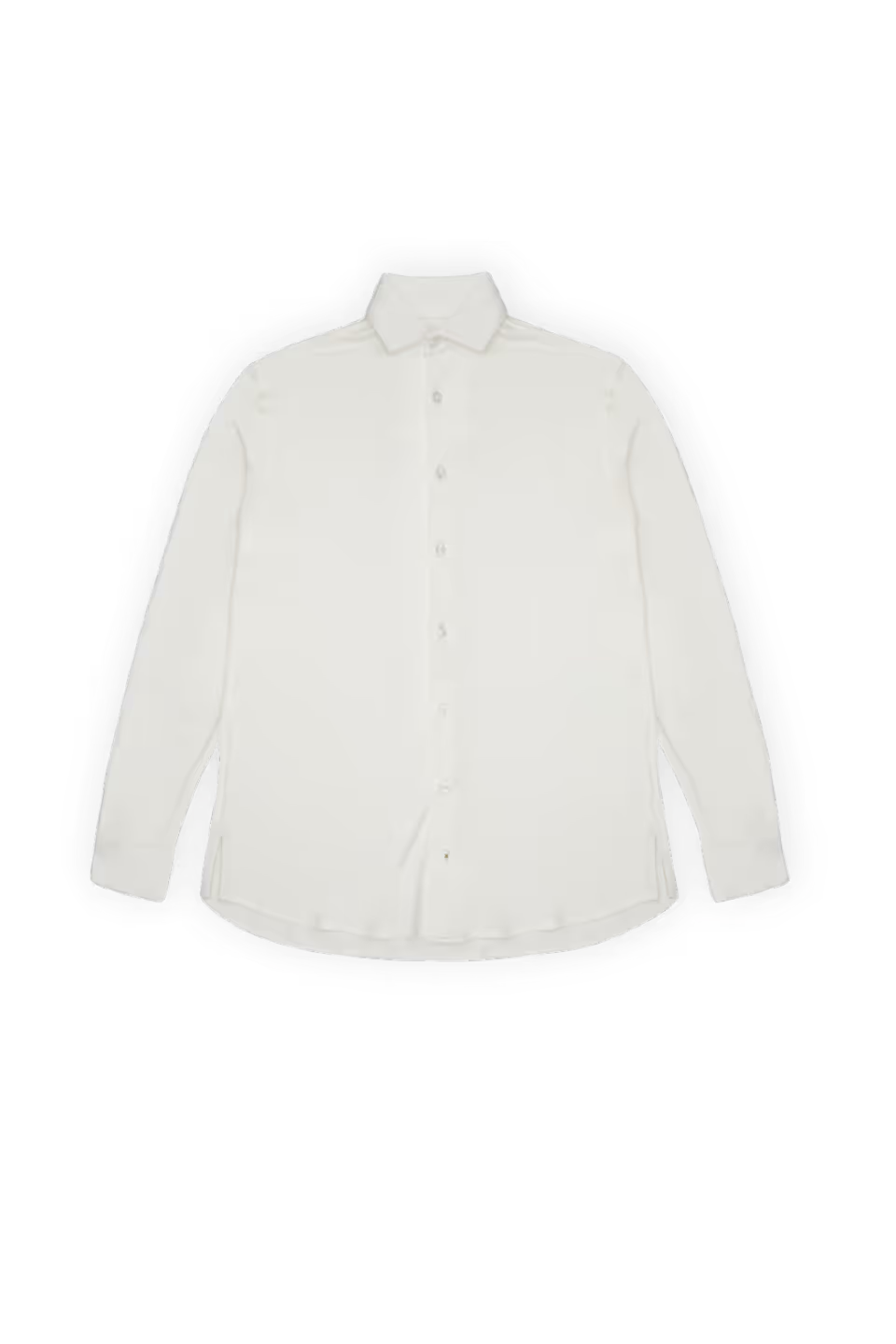
You feel the difference the moment it touches your skin. Pima cotton fibres are extra-long staple — exceeding 35 millimetres in length, roughly double that of ordinary cotton. That additional length yields fabric with a silky hand, a gentle lustre, and a durability that defies expectation. Pilling, the bane of lesser cottons, simply does not occur — not after ten washes, not after a hundred.
Equally vital is how this cotton is harvested. Peruvian Pima is still picked entirely by hand — a slower, more deliberate process that keeps each fibre intact, free from the impurities that machines leave behind. The result is a pure, brilliant white that absorbs colour with extraordinary depth and evenness. It is an unhurried practice, one that sustains the communities who have lived alongside this fibre for generations.
Yet Pima tells only half of our material story. Equally central is Alpaca wool from the high-altitude regions of the Andes — a natural fibre that is ultra-soft, naturally insulating, and remarkably light. We work with highland herders who tend their animals across the Andean plateaux, carrying knowledge passed down through generations. Pima for the skin, Alpaca for the cooler days — two fibres, one origin, one promise.
The Mountain Plateau of Ibagué
Having found our fibres in Peru, we needed a place that could think them further. The search led us up the Andean range into Colombia, to the department of Tolima — and to a city that reveals its character slowly.
Ibagué sits on a plateau ringed by mountains, with the snow-capped Nevado del Tolima rising behind it. The city has been a centre of Colombian textile craft for centuries — its textile production ranks among the most significant in the country. Here, on this plateau, we established our design studio. A small, talented team dedicated to enhancing the singular qualities of Peruvian Pima cotton and Andean textiles, translating them into designs that feel timeless.
Colombian fashion carries a rich tradition that extends far beyond what international catwalks reveal. In Ibagué, Andean craftsmanship and contemporary design converge in a way that captivated us from the very beginning. Our team works with techniques that trace their roots to pre-Colombian traditions — and renders them in cuts and silhouettes that feel as natural on the streets of Vienna as they do in Bogotá or Lima.
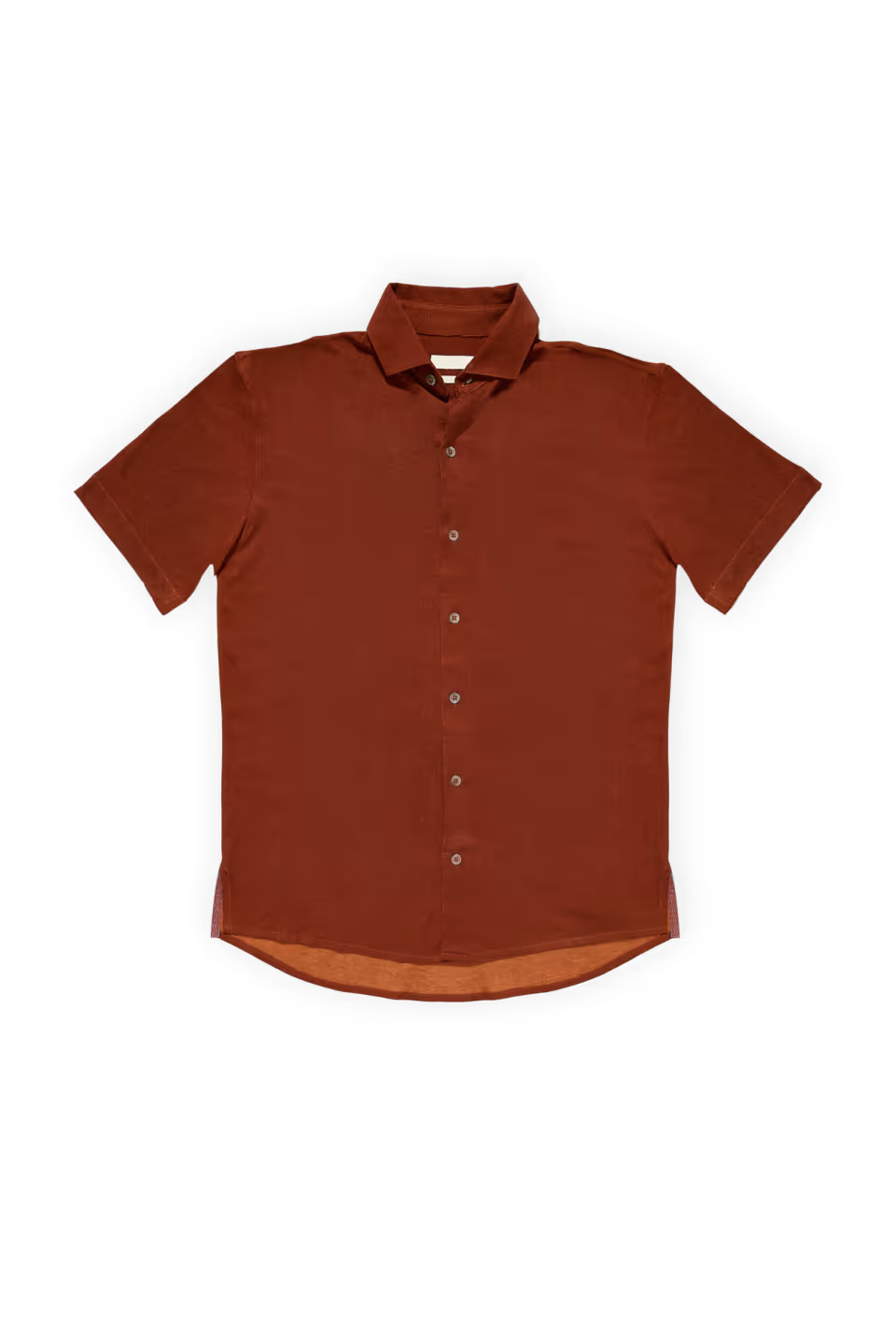
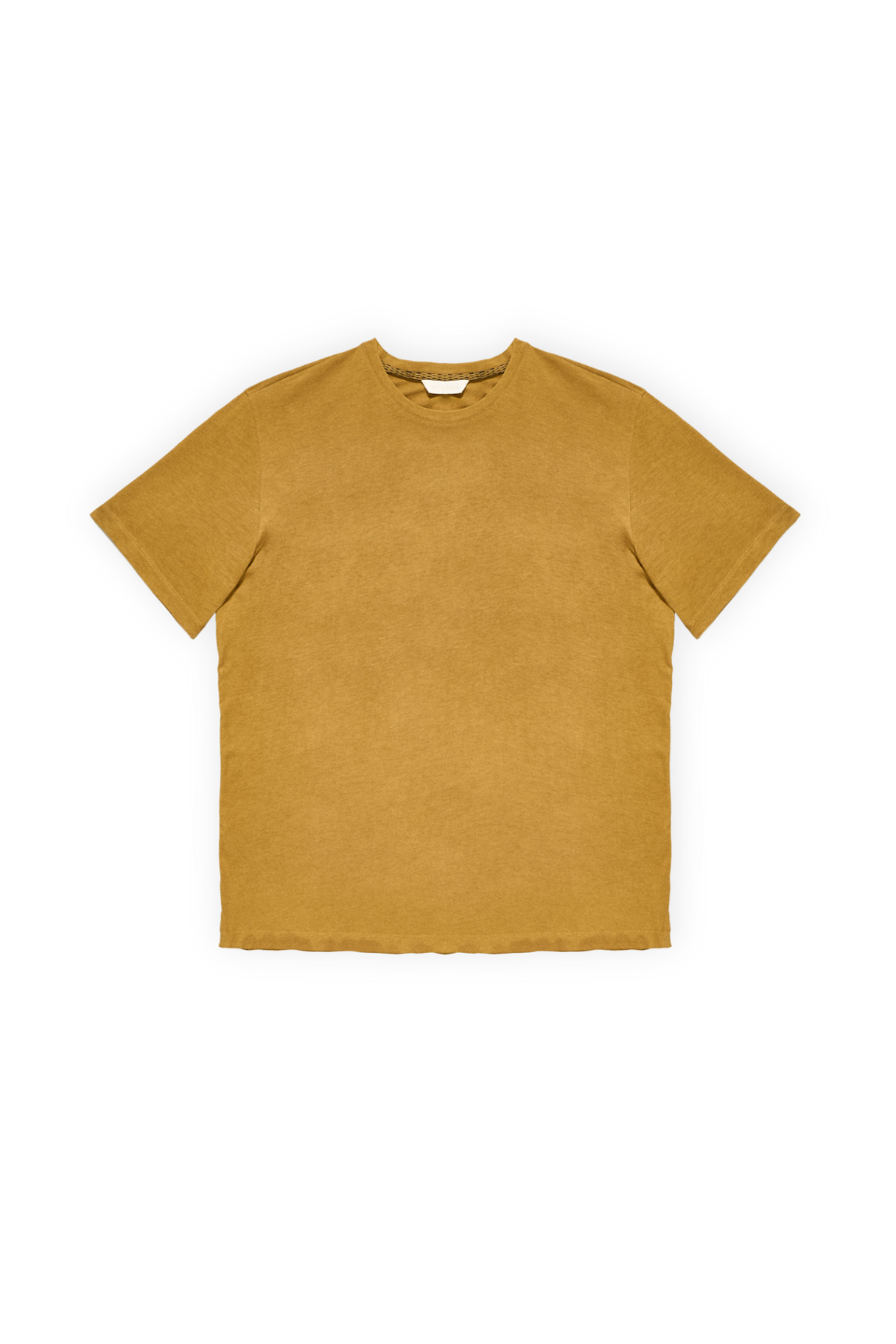
Closest to our hearts is the work behind our Natural Dye line. The shirts and t-shirts in this collection are hand-dyed by artisans from the Amazon region, using pigments drawn from plants, earth, and bark — materials that have been used for centuries. Every piece is unique. Every shade a signature of the natural world. It is South American fashion in its deepest sense: clothing that forges a connection between the person who wears it and the hands that created it.
Chirimoya — A Name That Tastes of Indulgence
We had the fibre. We had the studio. What we still lacked was a name — something that could distil our values and the places that inspire us into a single word.
The answer appeared on the vendor carts that accompanied us throughout our travels across the Andes. The Chirimoya — a fruit as unassuming in appearance as it is astonishing at first bite. Mark Twain called it "the most delicious fruit known to men." A small indulgence you must taste to understand. Silky on the tongue. Unexpectedly sweet. Distinctly Andean in its character.
That is precisely how our clothing should feel. A quiet luxury that convinces with the first touch. Discover our story.
Vienna: Where Tradition Meets the Present
Few cities hold past and present in such easy balance as Vienna. Imperial façades along the Ring, and behind them the ateliers of young designers. Coffee-house culture and late-night sets. It was this simultaneity that drew us here — a city that understands tradition is not the opposite of modernity, but its foundation.
Our boutique at Kohlmarkt 10, in Vienna's first district, sits at the heart of this story. The Kohlmarkt is one of the city's oldest trading streets. Here, Chirimoya takes its place within a tradition of craftsmanship and quality that has shaped Vienna for centuries. Our second location at Lindengasse 25/2, in the seventh district, connects us to a younger, more restless Vienna — the Neubau quarter with its galleries, independent shops, and specialty coffee bars.
Vienna is also where we bring our Andean craftsmanship to a wider audience. At CREAM Vienna — a curated event celebrating contemporary craft, art, and culinary culture at the Reaktor — we present pieces that make visible the bridge between Latin American luxury fashion and European sensibility. The hand-dyed Natural Dye shirts and Pima cotton t-shirts embody what Chirimoya stands for: clothing with a story behind it. A story from the Andes, told in Vienna.
Clothing for the Journey
We believe clothing is more than what it covers. That a t-shirt which feels the same after its hundredth wash as it did on the first is a form of respect — for the materials, for the people who made it, and for you, the person wearing it.
Sustainability, for us, is not a label on a tag. It means creating garments that endure a lifetime without losing their allure. It means choosing materials that are inherently long-lasting, and working them with a care you can feel when you turn the fabric between your fingers.
Our purpose is to foster connection — from the clothes on your skin to the memories made while wearing them. Between the coastal valleys of Peru and your everyday life in Vienna. Between what was, and what is yet to come.
For the journey.
Frequently Asked Questions
Chirimoya sources its Peruvian Pima cotton from the northern coastal valleys of Peru, particularly the Piura and Chira regions. These areas offer ideal growing conditions for this extra-long staple fibre. The cotton is harvested entirely by hand, preserving fibre purity and quality whilst supporting local farming communities in Peru.
Chirimoya's Natural Dye pieces are hand-dyed by artisans from the Amazon region using natural pigments derived from plants, earth, and bark — techniques passed down through generations. Each piece is unique, with individual colour variations that emerge through the natural dyeing process, making every garment a one-of-a-kind creation.
Chirimoya's design studio is located in Ibagué, the capital of the Tolima department in Colombia. The city has a long-standing tradition in textile production and sits within the Colombian Andean region. A small team works here to enhance the distinctive qualities of Pima cotton and Alpaca wool, translating Andean craftsmanship into timeless, contemporary design.
Chirimoya has two locations in Vienna: the boutique at Kohlmarkt 10 in the first district and a second space at Lindengasse 25/2 in the seventh district. The brand also regularly exhibits at CREAM Vienna, a curated craft and design event held at the Reaktor. The full collection is available online at chirimoya.com.
Chirimoya takes its name from the Andean fruit that Mark Twain described as "the most delicious fruit known to men." The name captures the essence of the brand: a sensory indulgence that convinces with the first touch — natural, distinctly Andean in origin, and unmistakable in character. The founders discovered the fruit on vendor carts during their travels through the Andean region.
Peruvian fashion and Latin American luxury fashion are distinguished by a deep connection to natural materials and artisanal traditions. Fibres such as Pima cotton and Alpaca wool have been cultivated in the Andes for centuries. Chirimoya bridges this South American heritage with European aesthetics — Andean textiles, crafted in Colombia, worn in Vienna.
Related Articles

What Makes Loungewear Ultra-Soft, and How Do You Choose the Best Quality Pieces?
Discover what truly makes loungewear ultra-soft, from fiber origin to artisan finishing, and how to judge real quality before you buy.

How Does Artisanal, Small-Batch Clothing Production Help Fight Climate Change?
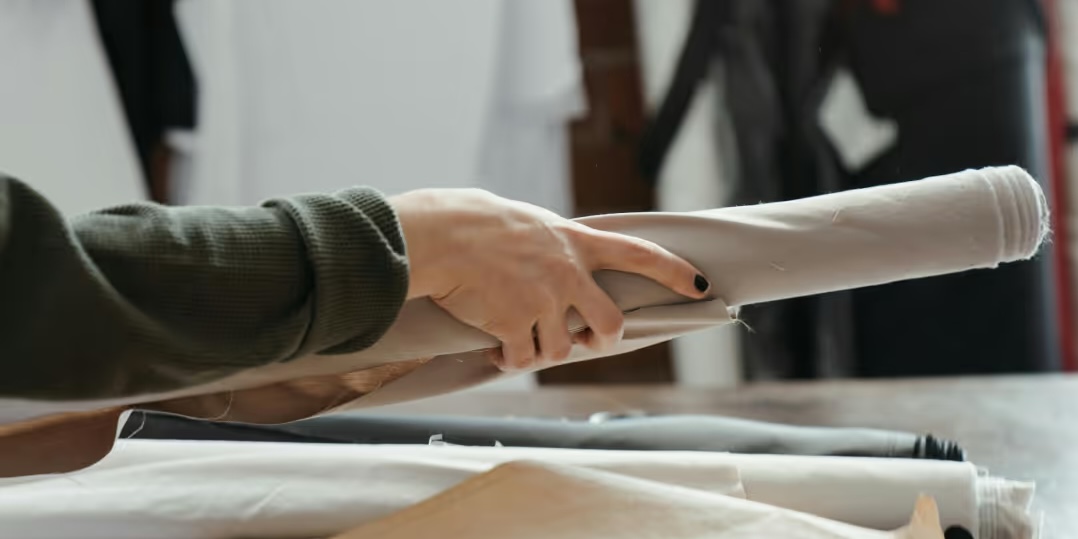
How small-batch Andean craftsmanship removes carbon-heavy manufacturing from fashion and makes clothing built to last.

